
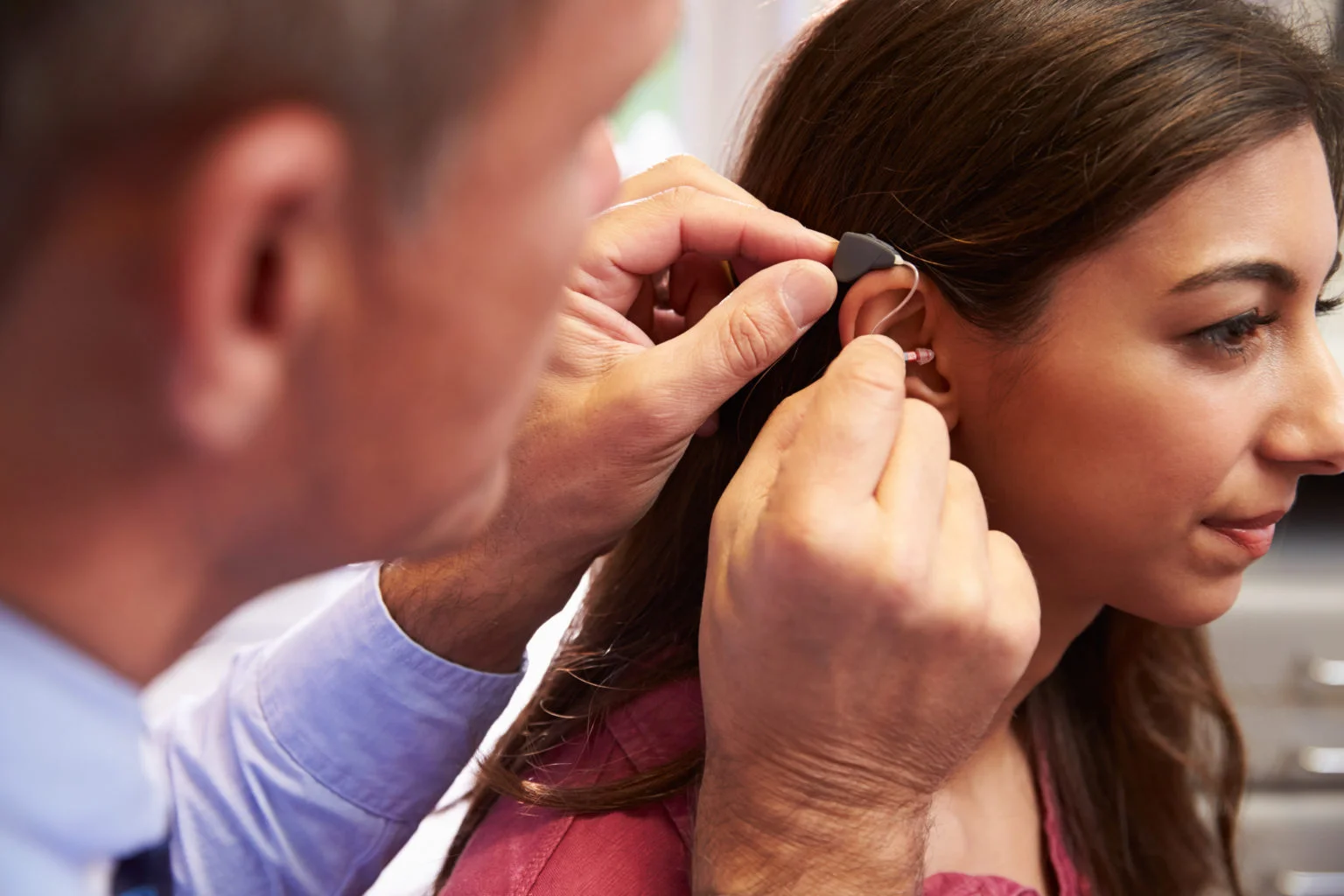
FigCare Pay helps patients spread the cost of hearing aids, diagnostic services, and eligible audiology care into manageable monthly payments through financing options from multiple lending partners.

Your practice gets access to the tools, application links, and resources needed to start offering patient financing.

Introduce financing during consultations, treatment planning, estimates, checkout, or follow-up.

Once an approved patient's financing is funded, your practice receives payment and the lender handles repayment.
Hearing aid financing gives your patients a comfortable way to pay for hearing aids and audiology care, so cost is less likely to stand between them and better hearing.
Hearing aids are one of the largest out-of-pocket purchases many older adults face, because Original Medicare does not cover hearing aids or the exams to fit them. A patient can know they need help hearing and still put it off for years when a pair costs thousands of dollars at once, and because devices are typically replaced every few years, that cost comes around again.
A way to pay over time changes that. When patients know they have options, more of them move forward with the hearing care you recommend, which supports better outcomes and a healthier practice.
With hearing aid financing, patients can spread the cost into monthly payments while your practice is paid in full, upfront. You keep your fees, the lender handles repayment, and your patient can move ahead with their hearing care.
Get Paid Upfront
Your practice receives the full amount once the loan funds, so you can focus on care instead of chasing balances.
Lender Handles Repayment
The lender takes on billing, reminders, and collections, giving your team back time for patients.
Keep Your Fees
Offer a flexible way to pay without discounting your services.
Key Takeaways
Hearing aid financing lets a patient pay for their devices and care in monthly installments, while your practice is paid in full once the loan funds.
The patient applies, reviews the options they qualify for, and moves ahead if approved. Your practice receives the full amount when the loan funds, and the patient repays the lender over a term that fits their budget.
FigCare Pay connects audiology practices and hearing centers with a network of lenders that help patients finance prescription hearing aids, premium and rechargeable devices, bundled hearing-care packages, and related treatment. Because hearing aids are rarely covered and are replaced every few years, a clear way to pay is often what turns a fitting consultation into a purchase.
| Stage | What Happens |
|---|---|
Step 1 Apply | The patient applies through your financing link and sees the monthly payment options they qualify for. |
Step 2 Choose an Offer | They compare the offers available to them and choose the term that fits their budget. |
Step 3 Fit the Devices | The loan funds, your practice is paid in full, and the patient moves ahead with fitting and follow-up care. |
Offer monthly payments through a lender, so patients pay over time while you keep your full fee and skip the billing and collections.
When a patient hesitates at the price of hearing aids, it is rarely because they doubt they need them. More often, paying thousands of dollars at once feels out of reach on a fixed income. Discounting cuts into your pricing and the bundled care that comes with it, and running your own payment plan asks your team to take on billing and collections. Financing keeps both off your plate: your patient pays over time, and the lender manages repayment.
Because hearing care runs on out-of-pocket revenue, that predictability helps you plan around device inventory, staffing, and the follow-up visits included in a bundled fitting.
Patients most often finance prescription hearing aids, premium and rechargeable models, bundled hearing-care packages, tinnitus treatment, and the out-of-pocket portion of cochlear implants.
Financing fits hearing care that patients pay for themselves, though eligibility for any specific service ultimately rests with the lender.
Prescription Hearing Aids
$1,500 – $7,000 per pair
Professionally fit devices across entry-level to advanced technology tiers.
Premium & Rechargeable Devices
$4,000 – $8,000 per pair
Top-tier hearing aids with rechargeable batteries, Bluetooth, and advanced processing.
Bundled Hearing-Care Packages
$3,000 – $8,000
Devices plus fitting, programming, and follow-up visits sold as one package.
Tinnitus Treatment
$1,000 – $4,000
Sound-therapy devices and management programs for tinnitus relief.
Cochlear Implant Out-of-Pocket
Varies by coverage
Deductibles and non-covered costs when insurance or Medicare covers the implant itself.
Assistive Devices & Accessories
$200 – $2,000
Remote microphones, TV streamers, and other assistive listening technology.
Card ranges are illustrative. Actual approval, amounts, rates, terms, and payments are set by the participating lender.
A pair of prescription hearing aids averages $2,500 to $3,690, and Original Medicare does not cover hearing aids, so most patients pay out of pocket.
Those figures come from the National Council on Aging. Over-the-counter devices start around $200 for mild to moderate loss, while professionally fit prescription aids and bundled care cost more because they include the exam, fitting, programming, and follow-up. Some Medicare Advantage plans offer a hearing benefit, but coverage is limited and varies by plan.
| Option | Average | Typical Range |
|---|---|---|
| Prescription hearing aids (pair) | $2,500 – $3,690 | $1,500 – $7,000 |
| Premium / rechargeable (pair) | — | $4,000 – $8,000 |
| Over-the-counter (pair) | — | $200 – $1,000 |
| Bundled hearing-care package | — | $3,000 – $8,000 |
| Tinnitus treatment program | — | $1,000 – $4,000 |
The prescription hearing aid average is published by the National Council on Aging. Typical Range figures are illustrative of what patients commonly pay and vary by technology tier, provider, and region.
Make monthly payments a normal part of the fitting consultation, not a last-minute option after someone reacts to the price.
Many hearing patients are on fixed incomes, so a clear, low-pressure sequence makes the conversation easier for everyone.
Make financing visible before and during the visit, on your website, intake forms, ads, and at the fitting.
The earlier patients know that paying over time is an option, the more likely they are to move ahead, so financing should read as a normal choice rather than a last resort.
Before the Visit
During the Visit
Financing pays your practice in full upfront and hands repayment to the lender; an in-house plan leaves you waiting on the balance and chasing missed payments.
Practices collect payment in several ways, and the real difference is how much time and risk each one puts on your team.
| Payment Method | When You Get Paid | Who Manages Repayment | Admin Overhead | Best For |
|---|---|---|---|---|
| FigCare Pay Financing | In full, once the loan funds | The lender | Low | Hearing aids and bundled care |
| Pay in Full | Right away | Not applicable | Low | Patients ready to pay upfront |
| Credit Card | After processing | Patient and card issuer | Low | Patients using available credit |
| Buy Now, Pay Later | Varies by provider | The provider | Low to moderate | Smaller balances, within provider limits |
| Your Own Payment Plan | Over time | You | High | Short-term arrangements you manage yourself |
Consider a patient fitted with a $4,800 pair of premium hearing aids. With your own plan at $800 a month over six months, you deliver the devices and follow-up care while waiting on the balance, and a late or failed payment becomes your team’s problem to chase. With financing, the patient borrows for the devices, the loan funds, and you are paid in full while the lender handles repayment and sets the rate, term, and approval.
Figures are illustrative. Actual approval, amounts, rates, terms, and payments are set by the participating lender.
Give patients a flexible way to pay monthly while you keep your fees and hand the billing to the lender.
The patient applies directly, the lender sets the rate and term, and once the loan funds your practice is paid according to your agreement.
During the application, the patient may be asked for details about their identity, income, and credit, and the lender decides the offer, including the rate, any fees, and the term.
The process varies from one lender to the next, and some let patients preview their options before a full application. Once everything is finalized and the loan funds, your practice is paid per your arrangement.
The loan is between the patient and the lender, so repayment follows the lender’s policies, while device returns during the trial period follow your policy and the lender’s.
If a Patient Misses a Payment
Missed payments fall under the lender’s policies. Keep clear records of your agreement and the devices and care you have provided.
If a Patient Returns Devices in the Trial Period
Spell out how your trial and return policy works alongside the financing. A return may trigger a refund or loan adjustment, so follow your policy and the lender’s requirements.
If a Patient Cancels
Set your cancellation and refund terms before the fitting. Any refund or adjustment follows your agreement and the lender’s terms.
Keep your pricing clear, present financing as one option among several, and send every question about rates and terms to the lender.
Describe devices, technology tiers, and expected benefit accurately, put your pricing and financial agreement in writing, and frame financing as a way to pay, never as a promise of a specific hearing result. For guidance on ethical practice and patient communication in audiology, practices can look to the American Academy of Audiology.
| Do This | Avoid This |
|---|---|
|
|
If you fit hearing aids and regularly hear that the price is too much at once, financing is likely a strong fit.
When patients say some version of “I know I need them, but I cannot pay for all of it right now,” a flexible way to pay keeps cost from ending the visit and helps more of them move ahead with the devices and care they need.
Add monthly payment options to the fittings you already do, keep your fees, and get paid in full once the loan funds.
FigCare Pay helps audiology practices and hearing centers build financing into their existing process, so cost is one less reason a patient delays better hearing.
Ready to Add Financing to Your Audiology Practice?
Request information to see how quickly you can start offering monthly payment options.
Important: FigCare Pay is not a lender and does not make credit decisions. Financing is provided by participating third-party lenders and is subject to eligibility, underwriting, approval, applicable terms, and provider requirements. Cost figures are national averages and typical ranges from the sources cited and do not reflect any specific practice’s pricing. This page is for general informational purposes only and is not legal, tax, credit, medical, or financial advice.
Healthcare providers often face the challenge of balancing patient affordability with business growth. FigCare Pay helps solve this challenge by creating flexible financing opportunities for both patients and practices.
Receive full payment within 1–2 business days of approval, no matter the patient's repayment term.
Practices consistently see more treatment plans accepted once monthly payment options are on the table.
Financing is non-recourse, so your practice isn’t responsible for patient repayment or defaults.
A real onboarding and support team helps your front desk get comfortable offering FigCarePay from day one.

Give patients more options to afford treatments without delaying necessary care.
Help more patients say yes to recommended procedures by reducing financial barriers.
Create opportunities for growth with financing solutions designed for healthcare businesses.
Work with a streamlined approach that makes exploring financing options easier.
Patient cost objections are the leading cause of abandoned consultations. Adjust the sliders below to see how offering flexible, point-of-sale financing lifts your case acceptance rate and accelerates annual cash flow.
Projected Annual Practice Growth
Based on a conservative +20% case acceptance lift when offering multi-lender patient payment plans at the point of care.
Projections illustrate potential revenue gains based on benchmark conversion improvements across medical and aesthetic practices. Actual acceptance rates, volume, and collections depend on patient demographics and individual credit tier underwriting.
The patient applies through the practice’s financing link, reviews the monthly payment offers they qualify for, and proceeds if approved. Once the loan funds, the practice receives the full fee and the lender manages repayment, so the patient can move ahead with fitting and follow-up care.
Original Medicare (Parts A and B) does not cover hearing aids or the exams to fit them. Some Medicare Advantage (Part C) plans include a limited hearing benefit, but coverage varies by plan, which is why most patients pay out of pocket or use financing.
Coverage varies widely, and many private plans offer only a partial allowance or no hearing aid benefit at all, while some states require coverage for children. Medicaid coverage also varies by state, and veterans may qualify through the VA, so patients often finance the balance insurance does not cover.
A pair of prescription hearing aids averages $2,500 to $3,690, according to the National Council on Aging, and premium models can reach $7,000 or more. The price usually includes the exam, fitting, programming, and follow-up care in a bundled package.
Patients commonly finance prescription hearing aids, premium and rechargeable models, bundled hearing-care packages, tinnitus treatment, and the out-of-pocket portion of cochlear implants. Eligibility for any specific service is set by the lender.
In many cases patients can check their options with a soft credit inquiry that does not affect their credit score. A hard inquiry, which may affect the score, generally happens only if the patient moves forward with a specific offer. The exact process varies by lender.
If a patient returns devices within your trial period, a refund or loan adjustment usually follows your return policy and the lender’s requirements. Spell out how your trial and return terms work alongside the financing before the fitting so there are no surprises.
The practice is typically paid in full once the loan funds and any funding requirements are completed. Exact timing depends on the lender and the financing product, so follow the funding steps your financing provider outlines.
Connect with FigCare Pay to discover how flexible financing options can help your patients and support your healthcare business growth.