Last updated September 2026
Traditional microneedling runs about $200 to $700 per session, while radiofrequency (RF) microneedling, such as Morpheus8, ranges from $600 to $2,400 per visit. Because collagen stimulation requires cumulative stimulation across three to six appointments, your true budget target is the cost of the entire treatment package rather than a single session.
Understanding that full treatment commitment upfront changes how you should plan your budget. This guide breaks down what microneedling costs across a standard clinical series, compares the clinical value of traditional versus RF devices, and outlines the most practical ways to pay, from prepaid clinic packages to monthly memberships and structured installment loans.
Microneedling is an elective aesthetic procedure with results that develop gradually as collagen remodels over several months. Take your time to review provider credentials and select a payment structure that fits comfortably within your monthly cash flow.
Expect to invest between $200 and $700 per session for traditional pen-based treatments, or $600 to $2,400 for RF microneedling. Adding topical platelet-rich plasma (PRP) increases the per-visit cost. Because clinical protocols rely on repeated sessions, you should plan around the package price rather than a single visit.
Here is a realistic breakdown of 2026 pricing across common microneedling protocols, comparing single-session costs to a typical treatment series:
| Treatment | Per Session | Typical Series (3 to 6) |
|---|---|---|
| Traditional microneedling | $200 to $700 | About $600 to $4,200 |
| RF microneedling (Morpheus8, Vivace) | $600 to $2,400 | About $2,000 to $4,500 |
| With PRP (vampire facial) | $500 to $1,500 | About $1,500 to $4,500 |
Typical 2026 cost estimates compiled from RealSelf patient records and published aesthetic clinic pricing. Expanding the treatment zone to include the neck or decollete increases fees, and high-cost metropolitan markets trend higher. Always obtain an itemized quote before beginning care.
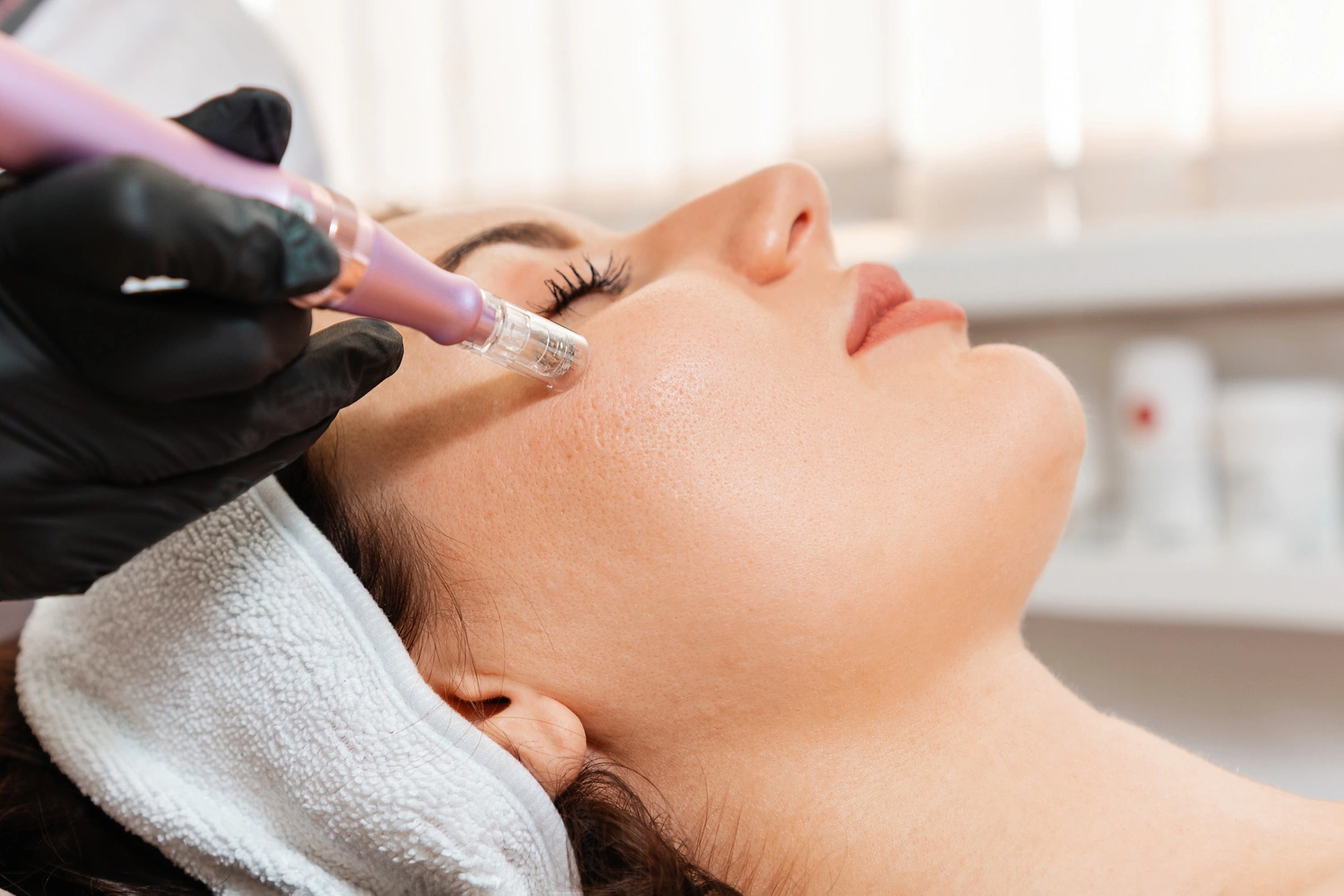
Microneedling initiates micro-injuries in the dermis to stimulate collagen and elastin production, a biological process that builds incrementally. A multi-session series of three to six treatments is standard protocol to achieve visible textural smoothing and skin firming.
Skin remodeling requires time. Initial healing occurs within days, but genuine cellular turnover and collagen maturation unfold over three to six months. Once you complete the foundation series, maintaining those results typically requires one or two touch-up visits per year for traditional microneedling, or a single refresher every twelve to eighteen months for radiofrequency. Budgeting for the upfront protocol alongside ongoing yearly maintenance ensures you have an accurate picture of total ownership costs.
It depends entirely on your anatomical goals. Radiofrequency delivers thermal energy directly into deeper dermal layers to tighten mild tissue laxity and improve subdermal contouring. However, for superficial texture, enlarged pores, and light acne scars, traditional microneedling provides comparable results at a fraction of the cost.
RF technology is effective for lower-face tightening, but it is not inherently necessary for every patient. In fact, clinical patient reviews often rate traditional pen microneedling higher for overall satisfaction when factoring in cost per treatment. A qualified provider will assess whether your skin laxity truly warrants radiofrequency thermal energy or if standard mechanical needling will achieve your goals. Keep in mind that in October 2025, the FDA issued a safety alert on radiofrequency microneedling risks, emphasizing that thermal energy devices require experienced medical supervision to prevent fat loss, burns, and hyperpigmentation.
In almost all cases, no. Health insurance and pre-tax medical accounts exclude procedures performed primarily for cosmetic reasons. Coverage or pre-tax approval is possible only when a physician documents that treatment serves a functional medical purpose.
Under IRS Publication 502, aesthetic facial procedures do not meet the definition of deductible medical care. If a dermatologist prescribes microneedling with a formal Letter of Medical Necessity to treat disabling acne scars or reconstructive scar tissue, certain HSA or FSA administrators may approve reimbursement. However, for routine anti-aging and skin rejuvenation, you should budget for the full procedure out of pocket.
Your optimal payment structure depends on your treatment timeline and need for financial flexibility. Prepaid packages deliver the deepest discounts, monthly memberships streamline routine upkeep, and third-party installment loans break large series into manageable monthly payments without risking non-refundable cash.
Here is how each payment method functions in practice:
Choosing how to pay for a treatment series comes down to three factors: the interest rate, whether the terms include deferred interest, and how much flexibility you retain if you decide to pause or switch providers.
Most aesthetic practices partner with third-party point-of-sale platforms, while independent personal loans offer an off-menu alternative. Here is how the primary financing routes compare side by side:
| Financing Method | Typical Terms | Interest Structure | Key Trade-off |
|---|---|---|---|
| Point-of-Sale Installments (Cherry, PatientFi, Sunbit) | 3 to 24 months; “Pay in 4” up to extended plans | True 0% APR on short plans; fixed 9.99% to 35.99% on longer terms | Tied exclusively to the partner clinic; cannot be split across multiple practices. |
| Medical Credit Cards (CareCredit, Alphaeon) | 6, 12, or 24-month promotional windows | Promotional 0% APR, but carries retroactive deferred interest (often 28%+) | Failing to clear the full balance before the promo window closes triggers interest on the entire original charge. |
| Personal Loans (Online marketplace lenders) | 12 to 60 months | Fixed APR (typically 7.99% to 24.99% based on credit); zero deferred-interest risk | Interest accrues immediately from day one, but monthly payments remain strictly level and predictable. |
| Direct Practice 0% Plans (In-house clinic financing) | Split across 3 to 6 session dates | 0% interest with no outside credit application | Requires higher monthly payments over a condensed timeframe, usually paid visit by visit. |
To pick the right financing vehicle for your series, weigh these three ground rules:
If you prefer spreading your treatment series into fixed monthly installments, you can review current prequalified loan offers through our partner network below. Prequalification uses a soft credit inquiry that will not impact your credit score.
Financed at an assumed 13% APR, a $2,500 treatment series runs about $223 per month on a 12-month term or $119 per month over 24 months. Reviewing the cumulative repayment total reveals the true cost of extending your loan term.
The comparison table below outlines estimated monthly payments and total borrowing costs across standard treatment packages over one- and two-year payback schedules:
| Amount Financed | 1-Yr Monthly | 1-Yr Total Repaid | 2-Yr Monthly | 2-Yr Total Repaid |
|---|---|---|---|---|
| $1,200 (traditional 3-pack) | About $107 | About $1,285 | About $57 | About $1370 |
| $2,500 (mid-range RF series) | About $223 | About $2,680 | About $119 | About $2,855 |
| $4,500 (full-face and neck RF) | About $402 | About $4,825 | About $214 | About $5,135 |
Representative financial model assuming a 13.00% APR. This is an informational estimate, not a binding loan offer. Actual APRs, loan terms, and origination fees reflect individual credit underwriting. You can check your rate with our partner SuperMoney in about two minutes via a soft credit check.
Financing makes financial sense for a multi-session series when paired with low or zero-interest promotional terms you can repay within a short timeframe. However, taking on long-term, high-interest debt for an elective cosmetic procedure creates unnecessary financial friction.
A structured installment plan works well for a fixed three- or four-session package, as it allows you to lock in package rates without parting with cash upfront. Conversely, you should avoid taking out multi-year loans at high interest rates for recurring aesthetic treatments. If available financing carries steep APRs, starting with a lower-cost traditional microneedling package and paying per session from monthly cash flow is the far more responsible strategy.
Most patients require a primary series of three to six sessions scheduled four to six weeks apart. Dermatologists typically recommend four to six visits for deep acne scarring. Always plan and budget for the full treatment series rather than an isolated appointment.
Almost never. Aesthetic practices generally enforce non-refundable and non-transferable terms on packaged treatments. If you are uncertain how your skin will respond, paying per session or utilizing installment financing preserves your ability to stop without forfeiting prepaid funds.
While clinical collagen synthesis lasts, normal biological aging continues. Most patients maintain their improvements with one or two maintenance sessions each year for traditional microneedling, or every twelve to eighteen months for radiofrequency treatments.
PRP roughly doubles your per-session expense by incorporating concentrated autologous growth factors. While it accelerates surface recovery and supports healing, traditional microneedling alone delivers substantial clinical improvements for texture and tone at a much lower cost.
No. Over-the-counter dermarollers penetrate only superficial epidermal layers, cannot reach the depth required for collagen remodeling, and carry significant infection and micro-tearing risks. Professional medical-grade pens deliver precise, sterile vertical punctures that cannot be replicated safely at home.
Yes. Expanding treatment to the neck, chest, or decollete typically adds $200 to $600 per appointment. When gathering quotes from providers, verify that treatment zones are explicitly listed so you are comparing identical protocols.
Aesthetic clinics advertise per-session rates to lower entry barriers, but clinical results require three to six appointments. Multiplied across the complete protocol, the total cost naturally jumps, which is why budgeting for the full series upfront is essential.
Build your financial plan around a complete multi-session series, choose between traditional and RF technology based strictly on your skin’s clinical needs, and pick a payment method that protects your flexibility.
Always request a clear, itemized quote detailing the full number of sessions, treatment areas, and post-care products before booking. Because health insurance and pre-tax health plans rarely cover cosmetic procedures, plan for direct out-of-pocket funding. Prepaid clinic packages offer solid savings if you know you will complete every session, while fixed installment financing lets you spread costs over time without locking your liquid cash into a non-refundable contract.
Do you own a med spa or aesthetic practice? See how to offer your clients monthly payment options.
Disclosure: FigCare Pay is not a lender, broker, or credit decision-maker. When you select “View My Offers,” you are redirected to an independent third-party loan marketplace where lenders determine all rates, terms, and approvals; FigCare Pay may receive referral compensation. Prequalification uses a soft credit check with no credit impact, though completing an official loan application may require a hard inquiry. Cost figures shown are estimated examples that vary by provider, treatment, and region and are not a quote. This page is general information only and is not medical, financial, tax, or legal advice. Talk with a qualified provider about whether microneedling is right for you.