Last updated September 2026
If you’ve been prescribed Zepbound, one of your first questions is probably what it will really cost. Here’s what to know. Zepbound isn’t a one-time expense. You take it month after month, so the number that matters is what you’ll pay each month, after any insurance or savings program.
The price swings a lot from one person to the next. It depends on your insurance, your dose, and whether you use the manufacturer’s program. Below, we’ll cover what Zepbound costs, why the price varies so much, how insurance and Medicare change what you pay, and where financing does and doesn’t fit.
One thing first. The right treatment depends on your health history and goals. Talk with your healthcare provider about whether Zepbound is right for you, and make that decision with your prescriber, not for financial reasons alone.
There is no fixed price for Zepbound. What you pay depends on your dose, your insurance, and whether you use the manufacturer’s program. The same medicine can cost one person $25 a month and another more than $1,000.
Here is what most people pay in 2026. Prices can change, so confirm the current cost with LillyDirect, your pharmacy, or your plan before you budget.
| How You Pay | Typical Monthly Cost | Notes |
|---|---|---|
| Commercial insurance + savings card | As little as $25 | Commercial plans only; not Medicare or Medicaid. |
| Self-pay vial, 2.5 mg | $299 | Through LillyDirect. |
| Self-pay vial, 5 mg | $399 | Through LillyDirect. |
| Self-pay vial, 7.5 mg and up | $449 | Through LillyDirect. |
| Retail branded pens (no discount) | About $1,294 | List price is $499 to $1,086 by dose; retail pens often cost more. |
Self-pay vial prices are from LillyDirect (Eli Lilly); retail and list figures verified via GoodRx (2026). At 7.5 mg and higher, the $449 price applies when you refill within 45 days; otherwise it is higher. Prices are set by the manufacturer, your plan, and the pharmacy, and are not a quote.
Zepbound comes two ways, and the price gap for the same medicine is wide. The single-dose vials are the lower-cost way to pay out of pocket. The ready-to-use pens are easier to use but cost far more at retail.
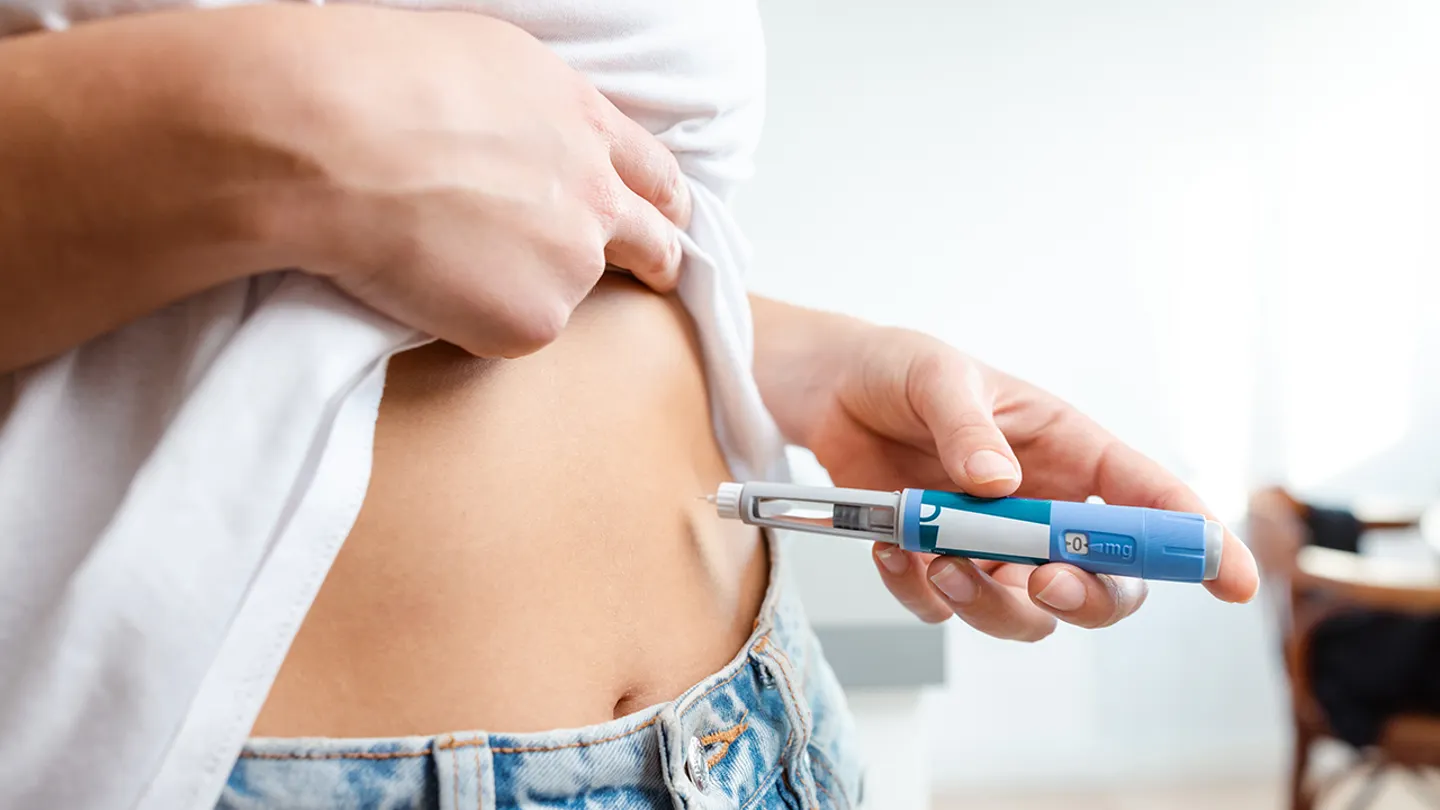
The branded pen is a prefilled auto-injector, the kind most pharmacies hand you. Without coverage, it runs close to $1,300 a month. The vial holds the same medicine, but you draw it into a syringe and inject it yourself, and the manufacturer sells it for much less through LillyDirect. If your insurance covers Zepbound and your copay is low, the pen may be worth it for the convenience. If you are paying on your own, ask your pharmacy or prescriber specifically about the self-pay vials. They give you the same tirzepatide for a fraction of the pen’s retail price.
Many people are willing to pay because it works well. In a head-to-head study, people taking tirzepatide lost about 20 percent of their body weight, compared with about 14 percent for semaglutide. Keep in mind that much of that weight tends to come back if you stop, so plan for Zepbound as an ongoing cost, not a one-time purchase. Taking it for type 2 diabetes instead of weight loss? The same medicine is sold as Mounjaro. See our guide to Mounjaro costs.
Coverage varies. Some commercial plans cover Zepbound for weight loss, and plenty exclude it. Medicare covers the Zepbound KwikPen for obesity only through a temporary Bridge Program at $50 a month, not through standard Part D.
Because Zepbound is labeled for obesity, a plan with weight-loss coverage may pay for it. Many employer plans leave that benefit out, though, and some cut it back in 2026. The quickest way to find out is to call the number on your insurance card, or check your plan’s drug list online, and ask two things: is Zepbound covered, and does it need prior authorization? Medicare is the big change this year. Standard Part D still cannot cover a drug for weight loss on its own, but a temporary GLP-1 Bridge Program that started July 1, 2026 offers the Zepbound KwikPen for obesity at a flat $50 a month if you meet the BMI rules and get prior approval.
A few details of the Bridge Program are easy to miss. It covers the KwikPen only, so the single-dose pen and the self-pay vials are not included. The $50 does not count toward your Part D deductible or your yearly out-of-pocket limit. And because the program is for obesity, you are not eligible if you also have type 2 diabetes, moderate-to-severe sleep apnea, or fatty liver disease, since those may be covered another way. Unlike semaglutide, tirzepatide does not yet have a Medicare-negotiated price, so no 2027 price cut applies to Zepbound.
Before you think about borrowing, check the programs that lower the price of the medicine itself. For a monthly cost, a lower price helps you far more than a way to finance a higher one.
Be cautious with heavily discounted “compounded” tirzepatide advertised online. After the FDA ended the tirzepatide shortage in late 2024, routine compounding is no longer permitted, so confirm that any source is legitimate and works with a licensed prescriber before paying.
If, after checking insurance and manufacturer programs, you have a larger one-time cost you want to spread over time, such as several months of vials bought up front, you can check current prequalified offers from lenders in our partner network below. Comparing prequalified offers uses a soft credit check, so it won’t affect your credit score.
For a cost that occurs every month, borrowing is usually not the most sustainable approach. A loan can help with a specific, larger expense, but it is a poor fit for an open-ended monthly refill.
The reason is simple. If you borrow to cover a refill one month, the next month’s refill still arrives, and so does the payment on what you already borrowed. Over time that can leave you paying for past refills and new ones at once, with interest added on top. For an ongoing medication, it usually works better to build the monthly cost into your budget using insurance, manufacturer programs, and a health account where they apply. That said, if paying for a larger chunk at once would help, say several months of vials up front or a stretch while an appeal is pending, spreading that defined amount over a term you choose can be a reasonable way to stay on your treatment. The right choice depends on your budget, so go with what works for you.
In many cases, yes. Zepbound may qualify as an eligible medical expense when it is prescribed to treat obesity as a diagnosed condition, though eligibility depends on IRS rules and your plan.
Because a health savings account or flexible spending account uses pre-tax dollars, it can lower what an eligible prescription really costs you. Whether Zepbound qualifies can depend on medical necessity and your plan’s rules, and some plans ask for a letter of medical necessity, so it is worth confirming with your plan administrator. You can review the general framework in IRS Publication 502. Keep in mind that FSA balances are often use-it-or-lose-it within a plan year.
If you do decide to finance a larger eligible cost, look at the full picture rather than the monthly payment alone. A lower monthly payment stretched over a longer term can mean paying more overall.
When comparing offers, weigh:
Prequalifying through a marketplace lets you place comparable offers side by side so these details are easier to weigh. You can check your rate with our partner SuperMoney in about two minutes, using a soft credit check that does not affect your credit score.
LillyDirect self-pay vials cost $299 a month at 2.5 mg, $399 at 5 mg, and $449 at 7.5 mg and up. Retail branded pens with no discount can top $1,200, so the vials are usually the lower-cost way to pay cash.
Usually, yes. The single-dose vials through LillyDirect run $299 to $449 a month, while branded auto-injector pens at retail average close to $1,300 for the same medicine.
You would need commercial insurance that covers Zepbound, plus the manufacturer’s savings card. The card does not work with Medicare, Medicaid, or other government coverage.
Yes. Eli Lilly, the maker of Zepbound, offers a savings card, which you may also see called a coupon or copay card, available through the manufacturer’s website. As of 2026, it can lower your cost to as little as $25 a month if you have commercial insurance that covers Zepbound, up to the card’s limits. It does not reduce the cash or self-pay price, and it is not available with Medicare, Medicaid, or other government coverage. Terms can change, so it is worth confirming the current offer with the manufacturer before you rely on it.
Not through standard Part D for weight loss. A temporary GLP-1 Bridge Program covers the Zepbound KwikPen for obesity at $50 a month, starting July 2026, with prior approval. The single-dose pen and vials are not included, and it excludes people who also have type 2 diabetes.
They are the same medicine, tirzepatide, with different names. Zepbound is approved for weight loss and Mounjaro for type 2 diabetes. If you are treating diabetes, see our Mounjaro page.
In a head-to-head study, tirzepatide (Zepbound) helped people lose more weight than semaglutide (Wegovy), about 20 percent of body weight versus about 14 percent. Results vary from person to person, and tirzepatide can cause more stomach side effects at higher doses.
Often, when it is prescribed to treat obesity as a diagnosed condition, though eligibility depends on IRS rules and your plan. Some plans ask for a letter of medical necessity, so confirm with your plan administrator before relying on it.
For a cost that repeats every month, borrowing is usually not the most sustainable approach, since you can end up paying for past refills and new ones at the same time, plus interest. Financing fits a larger one-time cost better. For an ongoing refill, building the monthly cost into your budget with insurance and manufacturer programs tends to work better, though spreading a defined amount can help if money is tight.
Start by finding your real monthly out-of-pocket cost, then plan for it over the length of treatment rather than only the first prescription.
Check your insurance and the savings card first, since those can change what you pay more than the way you cover the balance. Without coverage, the LillyDirect self-pay vials at $299 to $449 usually cost far less than the retail pens, and on Medicare for obesity it is worth checking the Bridge Program. An HSA or FSA can help with an eligible cost. Because Zepbound is usually a recurring expense, borrowing suits a larger one-time cost better than routine monthly refills, and any financing spreads a cost over time rather than lowering it. Whatever you decide, confirm the price with your prescriber or pharmacy, and if you compare financing, weigh the APR, fees, term, monthly payment, and total repayment before choosing.
Are you a weight-loss clinic or medical provider? See how to offer your patients monthly payment options.
Disclosure: FigCare Pay is not a lender, broker, or credit decision-maker. When you select “View My Offers,” you are redirected to an independent third-party loan marketplace where lenders determine all rates, terms, and approvals; FigCare Pay may receive referral compensation. Prequalification uses a soft credit check with no credit impact, though completing an official loan application may require a hard inquiry. All prices shown are examples that can change and are not a quote for your medication. This page is general information only and is not medical, financial, tax, or legal advice.